
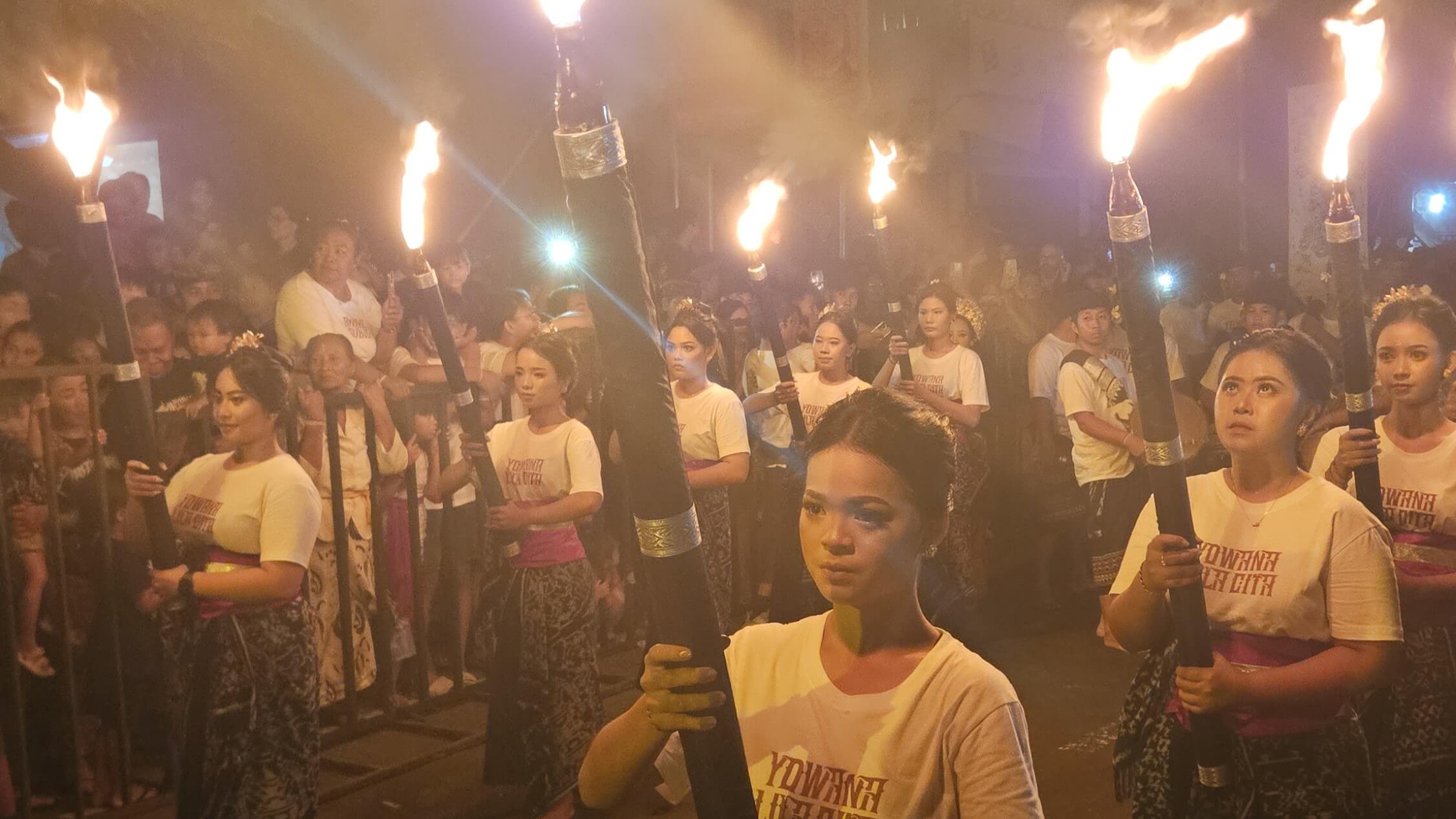
The Ogoh-Ogoh parade is closely related to Nyepi Day. Nyepi is one of the most unusual and significant holidays in Bali, celebrated annually by Balinese Hindus. It is the Day of Silence, symbolizing the beginning of the new year according to the Balinese Saka calendar. Locals take this holiday very seriously, and many take time off to celebrate with relatives back home.
Unlike the usual New Year celebrations with fireworks and parties, the Balinese New Year is a time of complete solitude, reflection and spiritual cleansing. In the year 2025, Nyepi falls on March 29, and on this day, life on the island literally comes to a standstill. All forms of activity are forbidden during the day: you can’t go outside, you can’t make noise, you can’t use electricity, and the airport and ports are completely closed. Even Internet connections can be cut off.
Nyepi is not just a day of silence. It is a ritual cycle that begins the day before Nyepi – preparations, karaoke, and a raucous Ogoh-Ogoh parade. And Nyepi ends with a gradual return to normal life on March 30th. Of course, the preparations for Nyepi start much earlier, and I will show you a bit of the preparation process.
But mostly in this article, I’ll share how the day before Nyepi begins – the festive chaos of March 28th. And I’ll also share personal observations and photos that will convey the atmosphere of this unique holiday.
What happens the day before Nyepi in Bali?
The day before Nyepi is a hectic time in Bali. It’s a time of preparation: locals and tourists buy food and water a day in advance, as no one will be able to leave the house on March 29th. Most shops and cafes are open part-time, usually until 3 pm. Only supermarkets – Indomaret, Alfamaret, Circle K and others – will remain open in the evening on March 28. Tourists, especially those who are experiencing the holiday for the first time, are surprised by the madness in the shops and the warnings of the innkeepers about tomorrow’s restrictions.
Throughout the day on March 28, Balinese carefully prepare for the upcoming day of solitude and introspection. Houses are buzzing with activity as hostesses clean every nook and cranny and prepare meals that will last a whole day without cooking – because Amati Karya, the ban on work, also applies to cooking.
Therefore, food is usually eaten cold on Nyepi Day, and some people practice light fasting as part of their spiritual cleansing. In temples, priests perform purification rituals, and residents bring gifts to the gods to ask for prosperity and protection.
It’s also a day when you can hear loud dance music or karaoke songs in the streets during the day. Local Balinese (from my observations – only men) gather on the street around a large table, drinking beer, eating snacks, and listening to music or singing karaoke. When I was filming one of these parties, I was noticed and invited to join them. They started serving beer and told me about the prohibitions on Nyepi Day. What I noticed was that there was a lot of beer on the table and a glass for everyone – they took turns drinking.
Ogoh-Ogoh parade 2025: Bali’s cleansing ritual before Nyepi
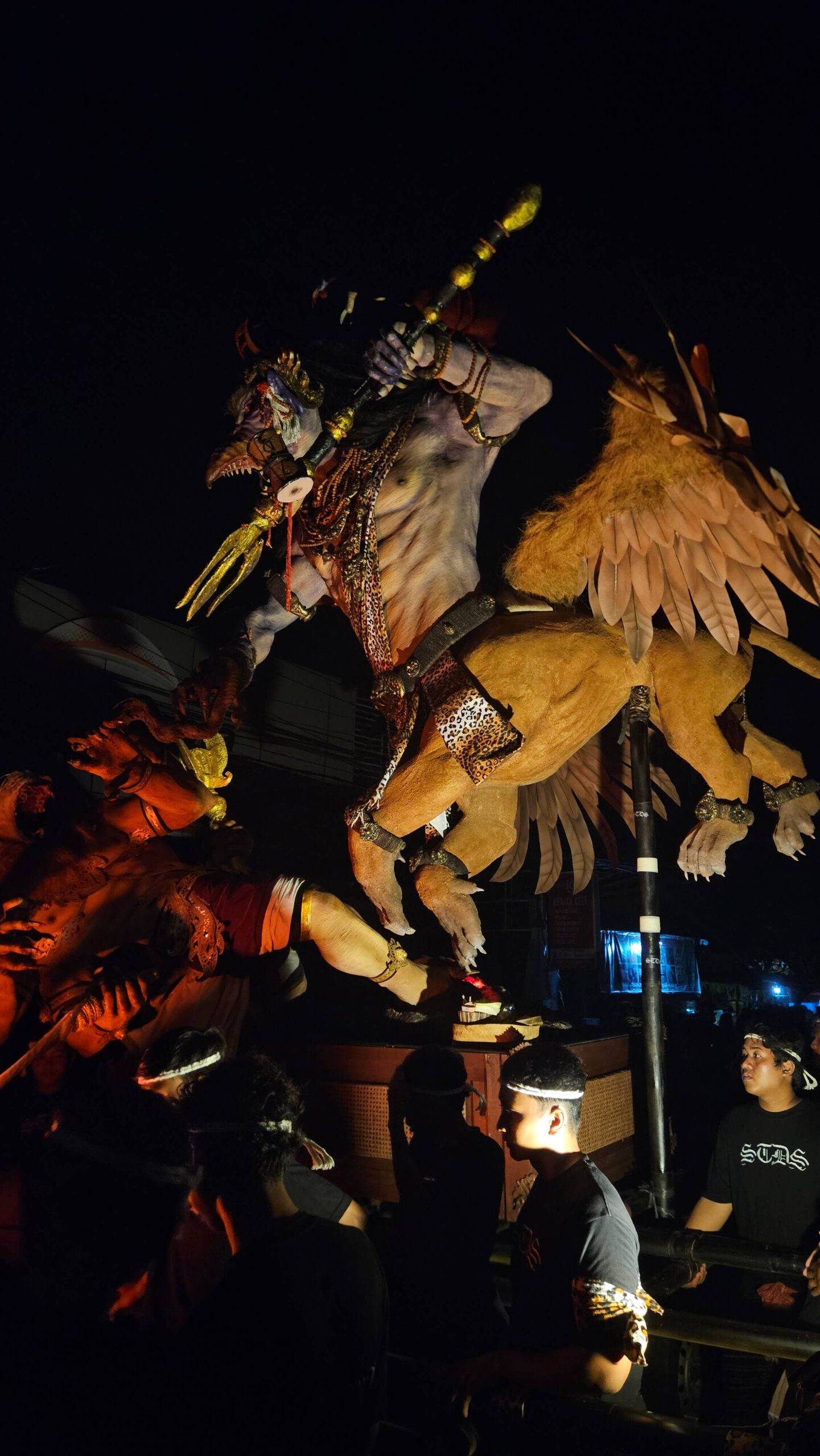
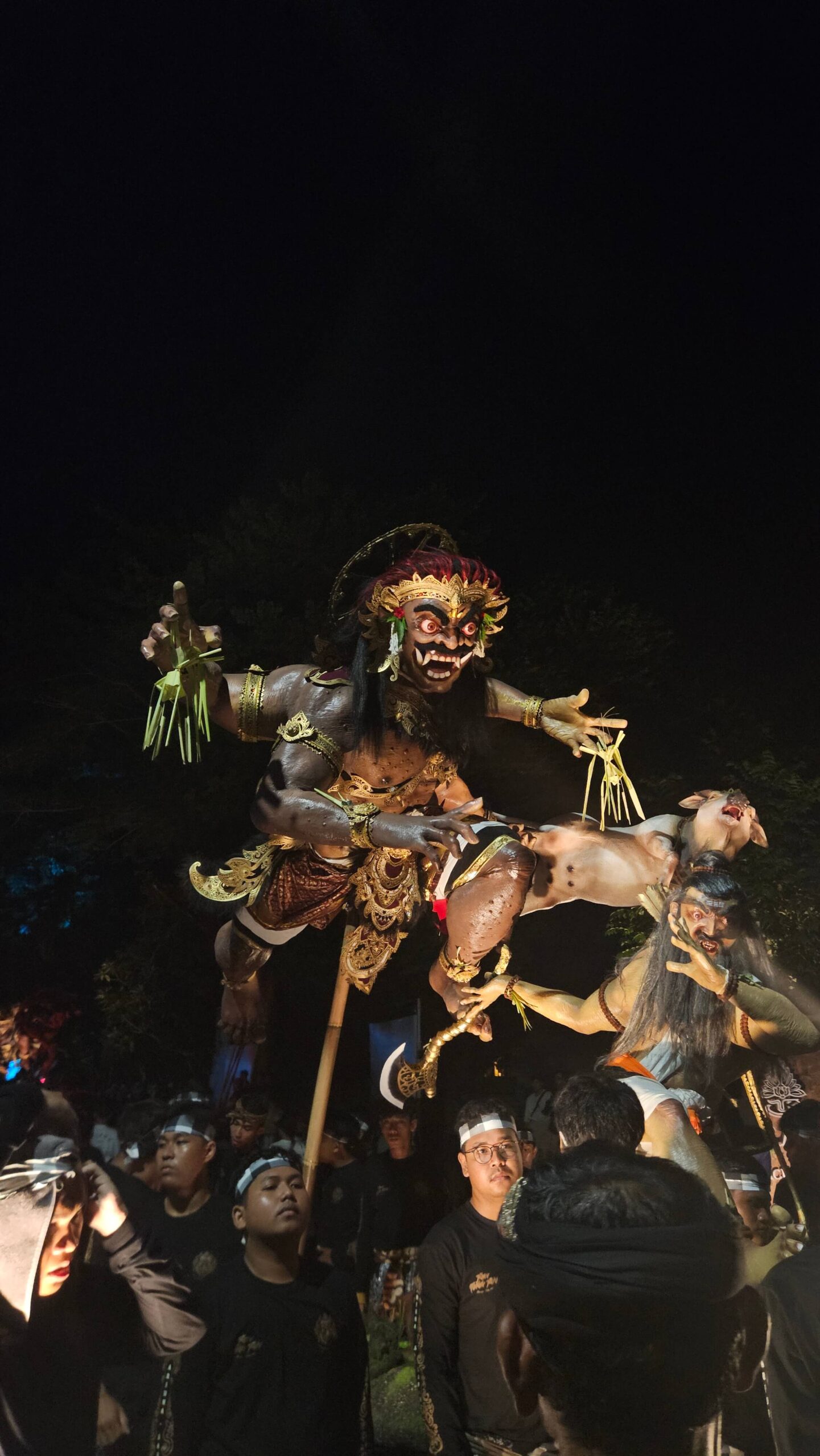
Of course, the main event of the day that many Balinese prepare for is the Ogoh-Ogoh parade. Ogoh-Ogoh are giant effigies of demons made of bamboo, paper and other materials. Each effigy is the embodiment of evil, negative energy, and all the vices the Balinese want to get rid of before the New Year in the Saka calendar. These intimidating yet mesmerizing creatures often stand several feet tall and are stunning in their detail and expression. And it is impossible not to mention the modern stuffing of such effigies – light diodes, lighting, smoke machines, sound effects and rotating elements.
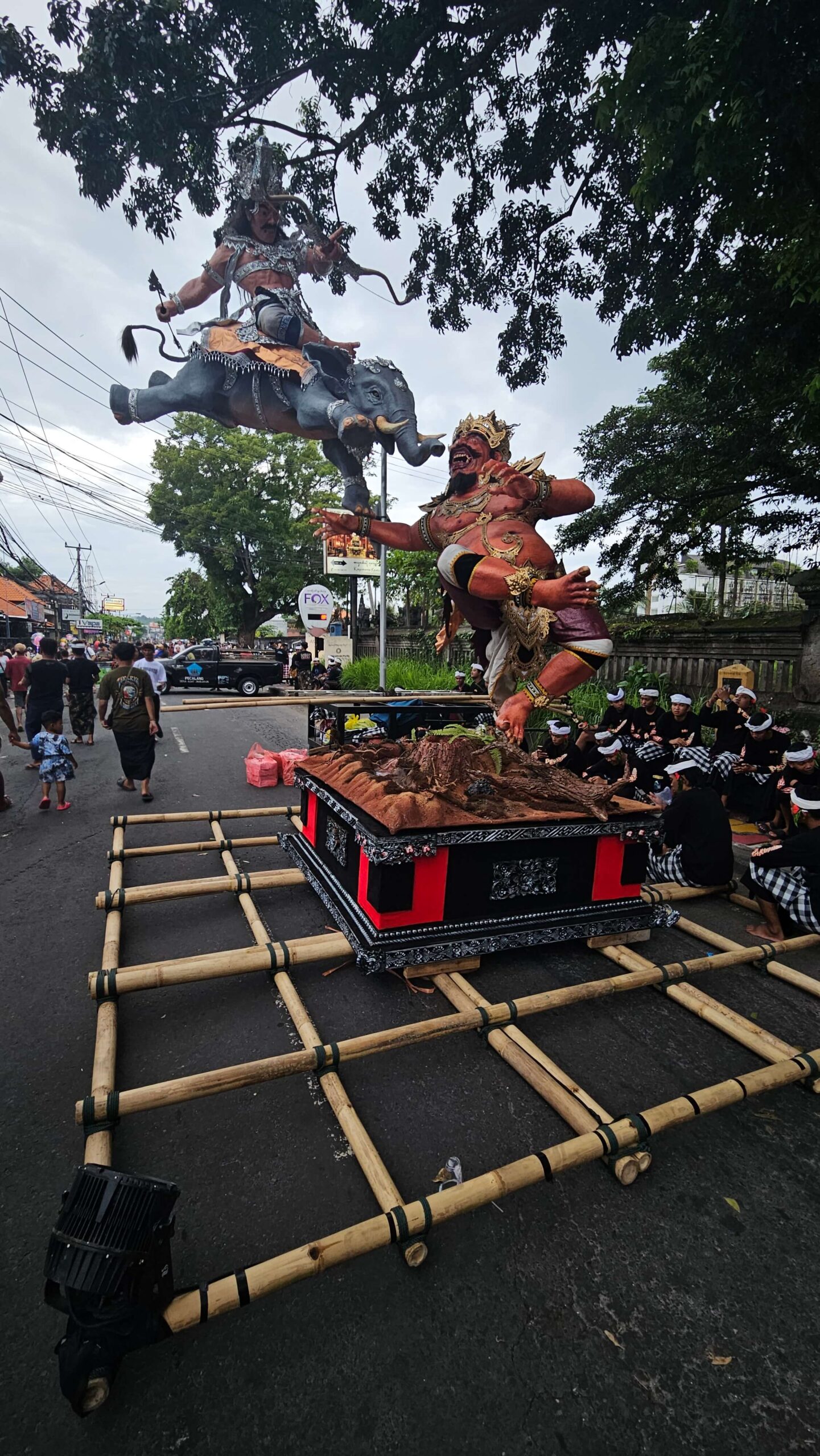

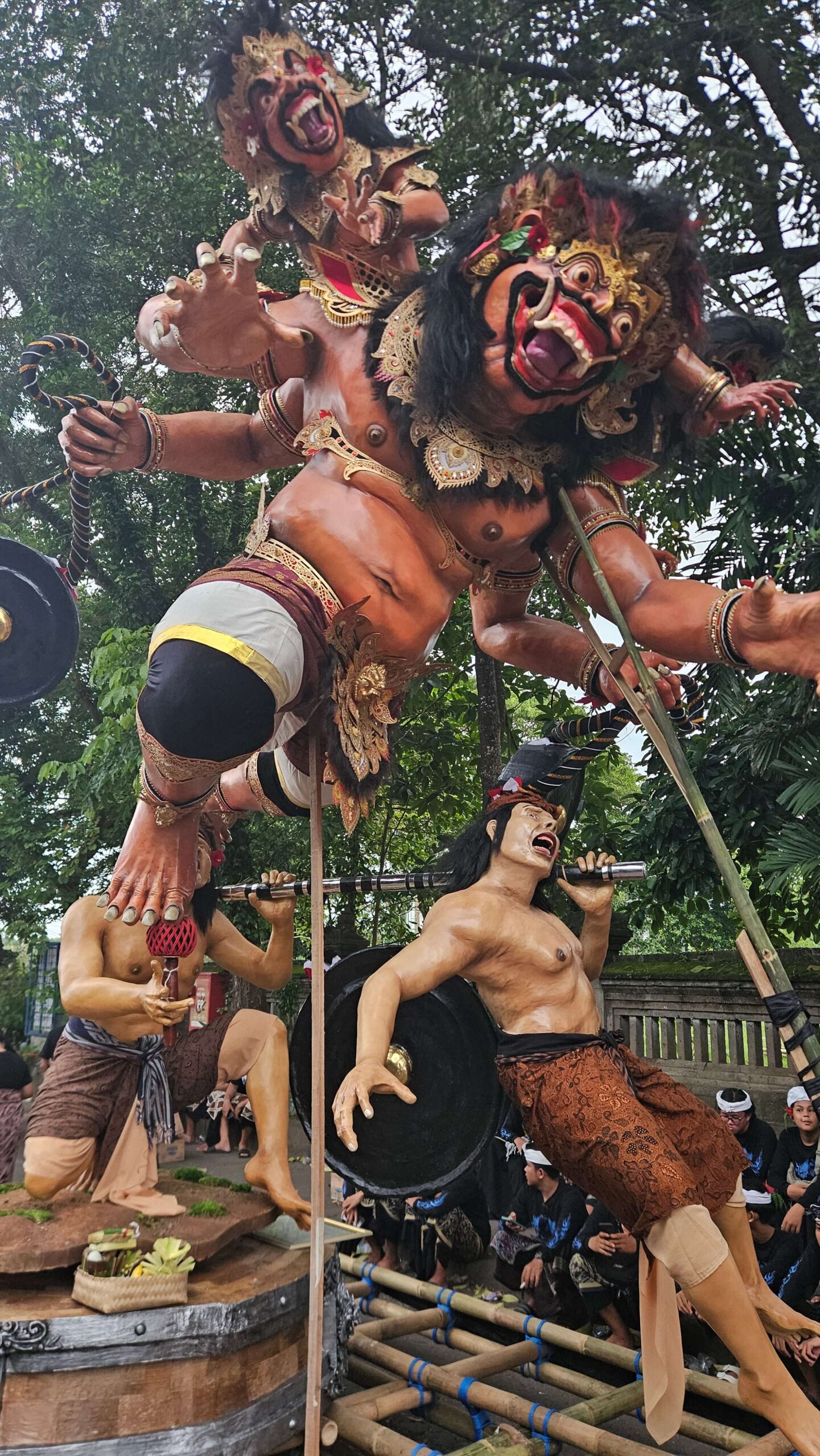
Ogoh-Ogoh parades take place all over the island of Bali, and you can always ask locals for information about the location and time. You can also find information on the internet by searching for “Ogoh-Ogoh Parade 2025 Jimbaran”. We were in Jimbaran, so we went to the Ogoh-Ogoh Festival at 6 o’clock, the parade started at 6:30 pm at this location – https://maps.app.goo.gl/RgCamxS6HVp5mKPGA. Arrive early, about an hour in advance to get the most comfortable seats to watch the parade. Be prepared for the Ogoh-Ogoh parade to last up to 5 hours or more.
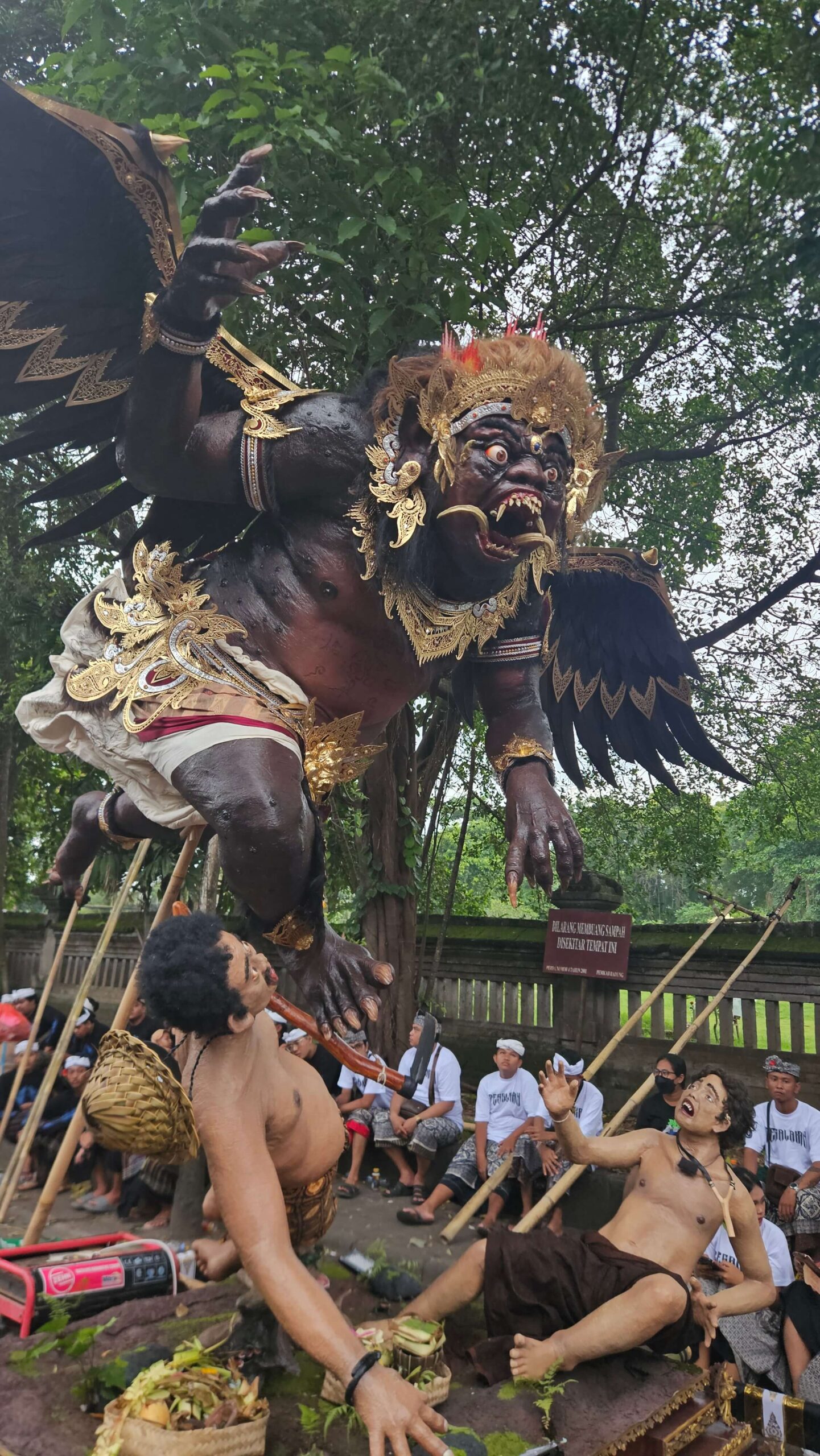

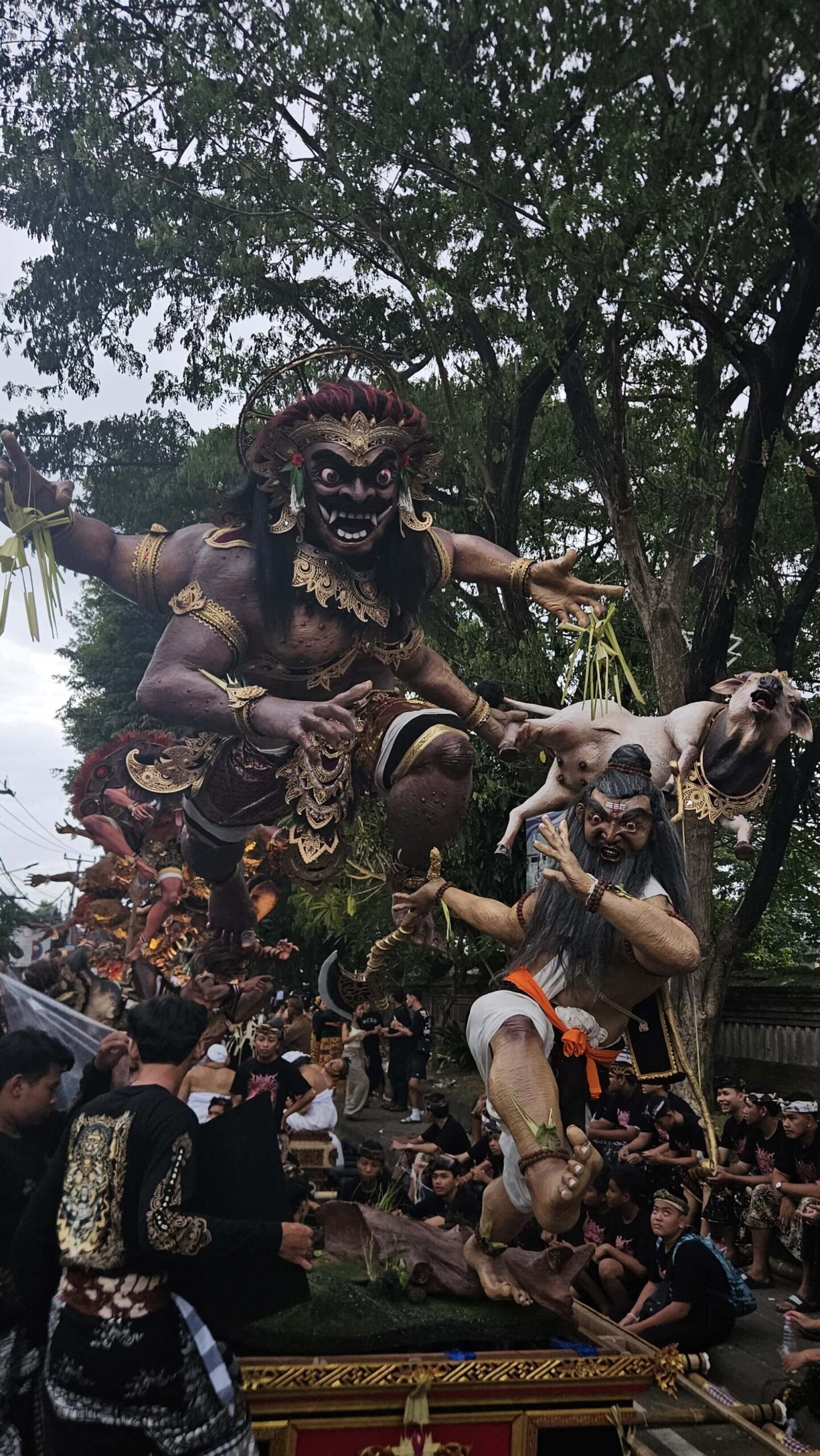
Well, the long-awaited start, the young people dressed in traditional attire line up and prepare to carry the huge figures, accompanied by the loud sounds of drums, gongs and other musical instruments. The Ogoh-Ogoh parade in Jimbaran consisted of 13 figures. Each figure is carried down a long corridor to an intersection where the dance begins and lasts about 20 minutes. It is very difficult to get to the crossroads, so you have to arrive early. The Ogo-Ogoh dance is chaotic, energetic, and even a little scary. It is believed that the noise and movement drive away evil spirits and purify the space.


The Ogoh-Ogoh parade is not just an entertainment for tourists and locals. Ogoh-Ogohs are created to concentrate negative energy, evil and vices to be expelled from the island of Bali before Nyepi Day. This process, according to the Balinese, can make certain places or people more susceptible to the effects of evil spirits. We witnessed one woman begin to cry dramatically, screaming and falling to her knees. The organizers immediately came to her, helped her up, and took her out of the crowd. Later, locals told us that sometimes this happens and people fall into a state of kedasran during the ogoh-ogoh parade.
Why does this happen?
- The Balinese perspective: Spirits resist exorcism and attack weak participants or those who have not observed a complete ritual fast.
- The scientific explanation: a combination of ecstasy, sleep deprivation (parade preparations last for weeks), and powerful acoustic effects (drums reach 120 dB).

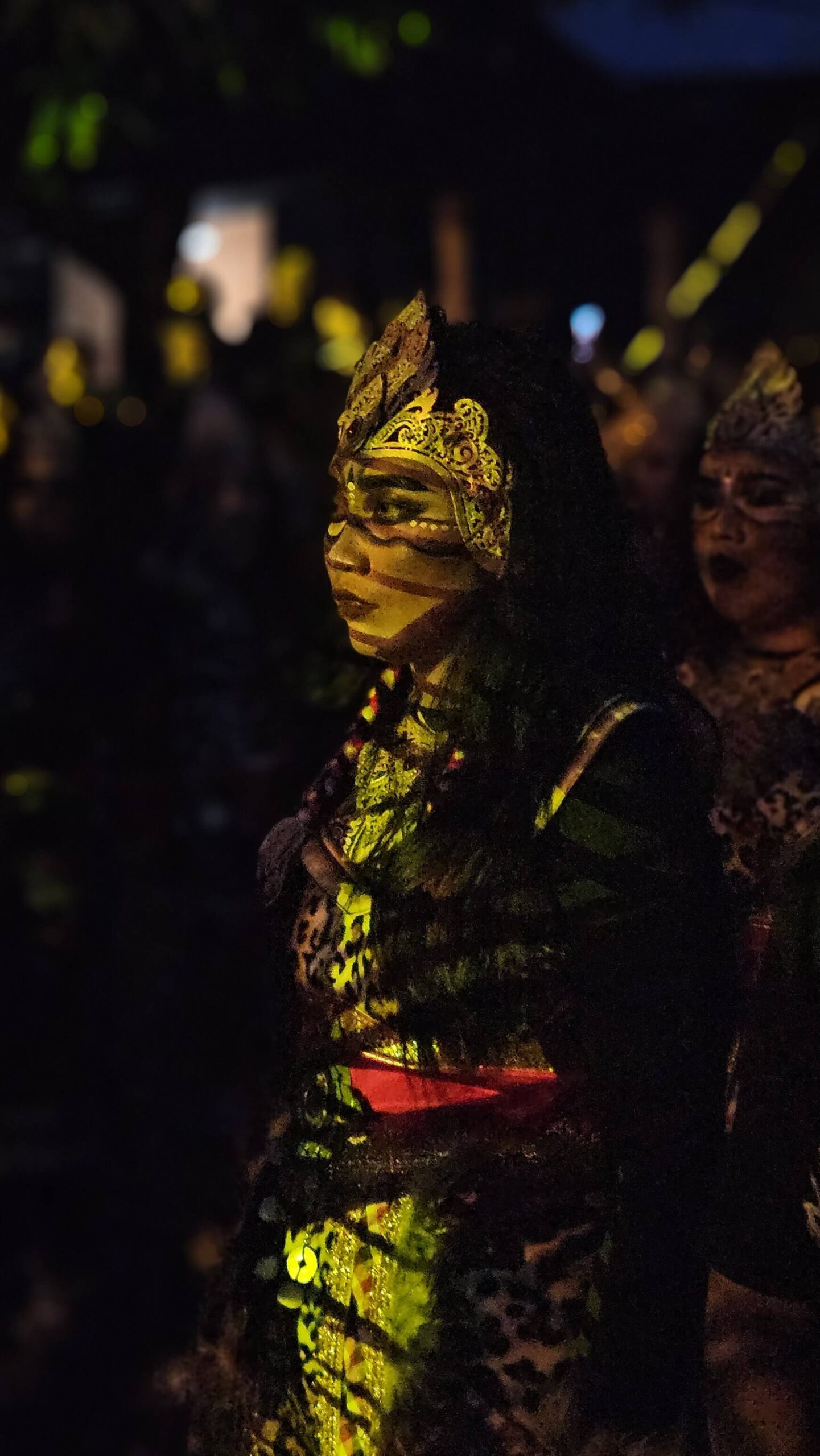


The parade culminates with the burning of the Ogoh-Ogoh after the parade, or the next day, which is less common. The flames consume the effigies, symbolizing the destruction of evil and the release of negative energy. Along with the smoke, all the troubles and misfortunes are carried away into the sky, leaving room for purity, harmony, and new hopes. We did not witness the burning, but we saw the Ogoh-Ogoh dolls being taken away in trucks after the parade.


After the burning of the Ogoh-Ogoh dolls, there is silence… Tomorrow is Nyepi Day, the day of silence, when the island will fall into total solitude and introspection. But until then, there are still a few hours to enjoy the last moments of bustle and prepare for the day of silence to come. There’s a chance to stop by the store for groceries if you haven’t already.
